What makes a brain game
A brain game is one where the best thinking wins. There are no dice to roll and no cards to draw. Some are puzzles, where you work out the one right answer. Others are games against a person or a bot, where you plan your moves and try to see what the other side will do.
The games here split into three kinds: logic puzzles, word puzzles, and strategy board games.
Logic puzzles
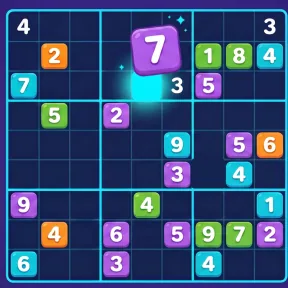
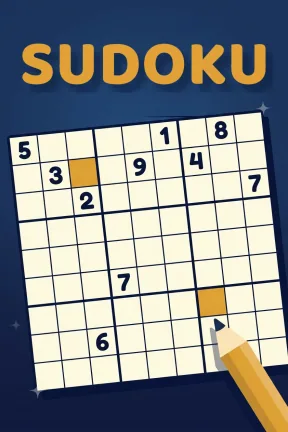
Sudoku is a 9x9 grid where each row, column, and 3x3 box needs the numbers 1 to 9, once each. Some squares start filled in, and you work out the rest. There are four levels: Easy, Medium, Hard, and Expert. Easy puzzles need only two simple checks. Harder ones need patterns like pairs and X-Wings, which the Sudoku strategy guide explains step by step. You can also pick how strict the game is about mistakes: Casual has no limit, Normal ends the puzzle on your 3rd mistake, and Perfectionist on your 1st.
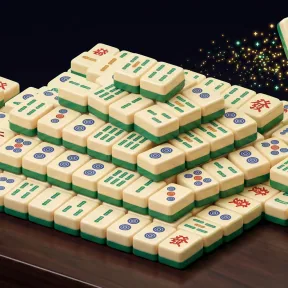
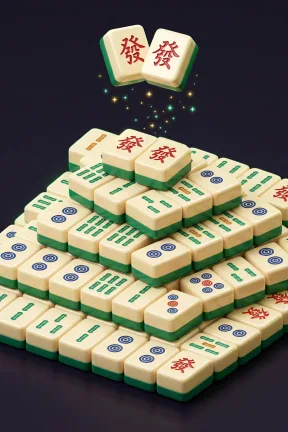
Mahjong Solitaire is a stack of tiles you clear by matching pairs. You can only take a tile that’s free, which means nothing sits on top of it and it’s open on the left or the right. The puzzle is the order: take the wrong pair first, and you can block the tiles you need later. Every board on Foony is dealt so it can be cleared. Mahjong Connect is another way to play, where two tiles match if a line with at most two turns can join them. Read the Mahjong Solitaire rules.
Word puzzles
Foonle is a Wordle-style game. You have 6 guesses to find a hidden word. After each guess, every letter turns green (right letter, right spot), yellow (right letter, wrong spot), or gray (not in the word). There’s one daily 5 letter word for everyone, and in a room you can pick words from 4 to 11 letters. The Foonle rules cover double letters and good first words.
In Pop-a-Word you get 5, 6, or 7 letters and 90 seconds to make as many words of 3 letters or more as you can. Longer words score more, and one word in each round uses every letter. It’s quick, so it’s a good game for a short break. See the Pop-a-Word rules.
Strategy games against a bot or a friend
These games have no hidden cards and no luck. Both players see everything, and the better plan wins.
| Game |
Bot levels |
What to think about |
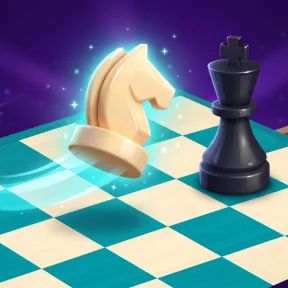
| Chess |
11, Trivial to Grandmaster |
Every piece moves its own way, and you plan an attack on the king |
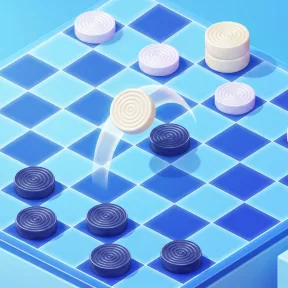
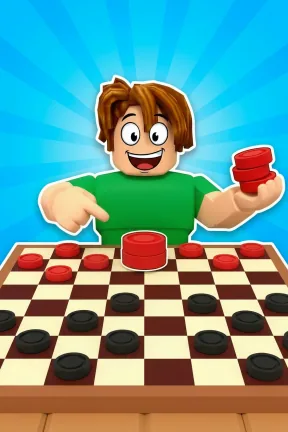
| Checkers |
7, Trivial to Grandmaster |
You must jump when you can, so a piece given away can win you two |
| Go |
6, Beginner to Master |
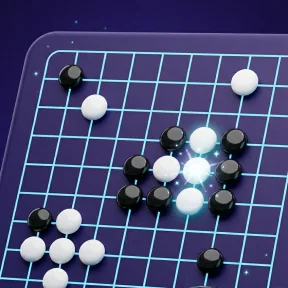
You place stones to fence in more space than your opponent |
| Mancala |
5, Beginner to Expert |
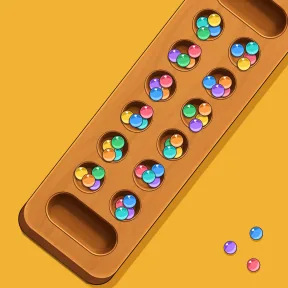
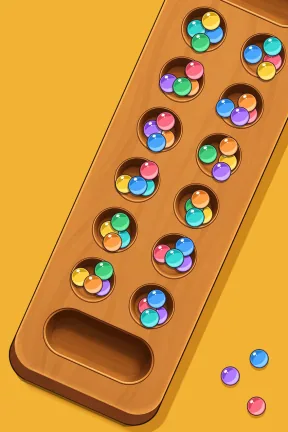
You count stones to see where your last one lands |
| 4 in a Row |
6, Easy to Grandmaster |
You set up two threats at once, so the other side can block only one |
| Tic Tac Toe |
5, up to Unbeatable |
On 3x3 you play for the draw, and on 5x5 and 7x7 you can win |
Two of these games have been solved, which means the result with perfect play is known. In 4 in a Row, the first player can always win by starting in the middle column. In Tic Tac Toe on 3x3, two perfect players always draw. That makes them good for learning to think ahead, since you can check your play against a known answer. The 4 in a Row strategy guide and the Tic Tac Toe strategy guide show how.
Mancala is in early access as of November 2026: any player can join a room, and Supporters can start one.
How to pick one
If you have 5 minutes: a round of Pop-a-Word, a game of Tic Tac Toe or 4 in a Row, or the daily Foonle.
If you have 20 minutes: an Easy or Medium Sudoku, a Mahjong Solitaire board, or a game of Checkers against a bot.
If you want something to get better at over months: Chess or Go. Both have many bot levels, so each step up is small. Start at the bottom and move up a level once you win most of your games at the one you’re on.
If you like numbers: Sudoku. If you like words: Foonle and Pop-a-Word. If you like a rival: Chess, Checkers, or Go against a friend.
A daily puzzle habit
Sudoku has four new daily puzzles every day, one for each level, and Foonle has a new daily word at midnight UTC. Everyone gets the same puzzles, so you can compare with friends. If you want one puzzle a day, these two are the place to start.
Alone, with friends, or with a whole room
All of these games work alone. Sudoku, Mahjong Solitaire, Foonle, and Pop-a-Word have no bots, since they’re puzzles, but you can share them with friends: Foonle and Pop-a-Word rooms race on the same word or letters, Sudoku has a co-op option, and Mahjong Solitaire has a Co-op Zen preset where you clear one board together. The board games can be played against a bot, a friend by room link, or a friend on the same screen.
For more puzzles, see the puzzle games. For more games that reward planning, including card games like Spades and Gin Rummy, see the strategy games.
What is the best free brain game to start with?
Sudoku on Easy if you like numbers, or Foonle if you like words. Both have a daily puzzle. For a game against someone, try 4 in a Row or Tic Tac Toe against an easy bot.
Do you need math for Sudoku?
No. You only place the numbers 1 to 9 so that no row, column, or box has the same number twice. It's logic, not adding.
Are there daily brain games?
Yes. Sudoku has four new daily puzzles, one for each difficulty, and Foonle has one daily 5 letter word. Both are the same for every player.
Can I play these logic games against the computer?
Chess, Checkers, Go, Mancala, 4 in a Row, and Tic Tac Toe all have bots, with levels from beginner to very strong. Sudoku, Mahjong Solitaire, Foonle, and Pop-a-Word are puzzles you solve on your own or with friends.
Will these games train my brain?
They're thinking games made for fun, not a training program, and we don't measure memory or attention. What you can see is your own progress, like moving up a bot level or solving a harder Sudoku.
Are these brain games good for adults?
Yes. Expert Sudoku, the top Chess and Go bots, and long Foonle words are hard for most adults. Each game also has easy levels, so the whole family can play.