What makes a strategy game
A strategy game is one where your choices decide most of the result. Each of these games is turn-based: one player moves, then the next. That gives you time to look at the board, think about what your opponent wants, and plan a few moves ahead.
There are two kinds here.
- Open information. In Chess, Go, Checkers, Mancala, 4 in a Row, and Tic Tac Toe, both players see everything and there’s no luck at all. The better plan wins.
- Hidden information. In Spades, Hearts, Euchre, Gin Rummy, and Battleblobs, you can’t see the other side’s cards or ships. The deal or the layout is luck. Strategy is about what you guess from what the others do, and about playing the odds.
Board games with no luck
Chess is played with 16 pieces each on 64 squares. Each kind of piece moves its own way, and you win by checkmate: the other king is under attack and has no way out. Start with three ideas from the chess strategy guide: control the center, bring out your knights and bishops early, and castle to keep your king safe.
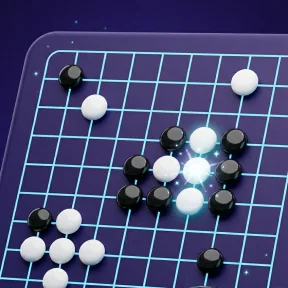
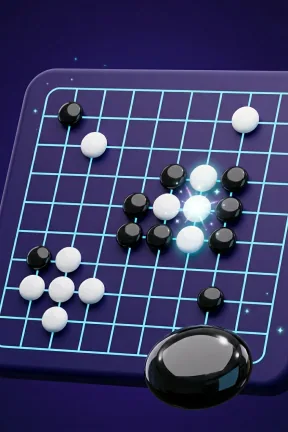
Go has only a few rules. You place stones to fence in empty space. A group with no empty points next to it is captured. Start on the 9x9 board. The Go rules show how a board is scored.
Checkers is a draw when both sides play perfectly. A computer program called Chinook showed that in 2007. Between people, the forced jump rule (if you can jump, you must) is what wins games: you give up one piece so that you can take two. The checkers strategy guide shows that trap and which back-row pieces to keep.
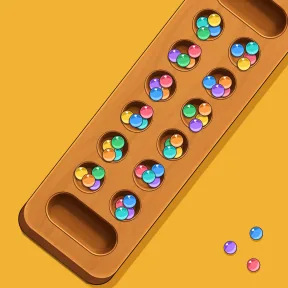
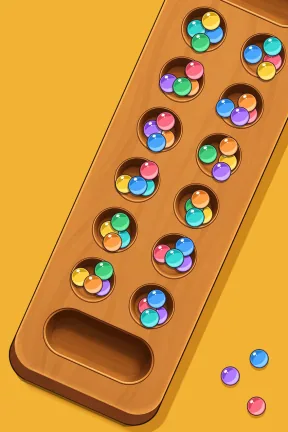
Mancala is about counting. A pit with the right number of stones ends your turn in your store, which gives you another turn. In the usual game with 4 stones per pit, the best first move is your third pit from the left, then your sixth. The Mancala strategy guide shows how to chain free turns and when to capture.
4 in a Row is solved on the 7x6 grid: the first player wins by starting in the middle. The key idea is the double threat, two places where you could win next turn, since your opponent can only block one. See the 4 in a Row strategy guide.
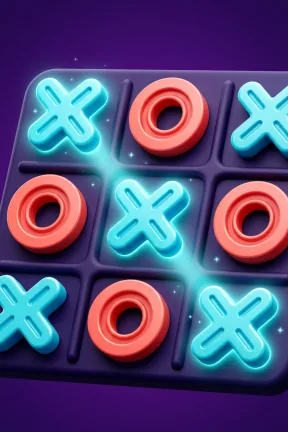
Tic Tac Toe is a draw on 3x3 with perfect play, but the 5x5, 7x7, and Ultimate grids are much harder. The tic tac toe strategy guide shows the best first move and the replies that never lose.
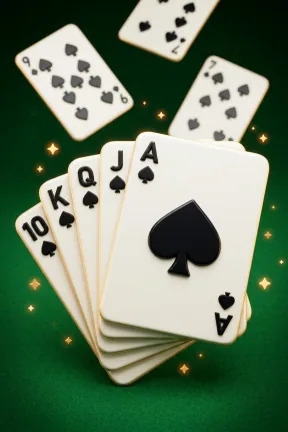
Spades is a bidding game. You say how many tricks you’ll take (a trick is one card from each player, and the best card wins it). A good bid comes from counting your hand: about 1 trick for each ace, about 3/4 for a king with at least one more card of its suit, and nearly 1 for each spade past your third. The Spades strategy guide works through a full hand and shows when to bid nil.
Hearts rewards losing tricks on purpose. The 3 cards you pass are an important choice: the ace and king of spades are good to pass, since they can get stuck taking the 13-point queen. See the Hearts rules.
Euchre is about when to make trump, the suit that beats all others for the hand. Your team has to take 3 of the 5 tricks, so count your trumps first. See the Euchre rules.
Gin Rummy is about when to knock. Knock early with a little deadwood and you might win the hand, but if your opponent has as little deadwood or less, they undercut you and get a bonus. See the Gin Rummy rules.
Battleblobs looks like luck, but it’s a search problem. In our tests of 2,000 games for each way of shooting, random shots took 95 shots to sink a fleet. Firing on a checkerboard and following each hit took 53, and also skipping the squares next to sunk ships took 44. The Battleblobs strategy guide explains why.
How to pick a strategy game
If you’re new to strategy games, start with Tic Tac Toe or 4 in a Row. Games are short, and you learn the two ideas that matter everywhere: make threats and block theirs.
If you want one game to study for years, pick Chess or Go. Both have rules pages and bots that go from beginner to very strong.
If you want strategy with friends at a table, pick Spades or Euchre with a partner, or Hearts where everyone plays alone.
Practice with bots, then play people
Every game on this page has bots at several levels. Chess has 11, from Trivial (about 0 Elo, a chess rating) up to Grandmaster (about 2700). Checkers has 7, and Go, 4 in a Row, and Battleblobs have 6 each. The card games have 4.
A good way to get better is to play a level until you win most of your games, then move up one. When you want a person, Chess and 4 in a Row have Play Online for a random opponent, and every game has rooms you can share with a friend by link. Most of the board games here also have Play in Person for 2 people on one device.
On phones and Chromebooks
These games run in the browser with nothing to install. Because they’re turn-based, they work well on a phone: tap a piece, then tap where it goes. They support Chrome back to version 88, which includes most school Chromebooks.
What are the best free strategy games to play online?
For pure planning with no luck, try Chess, Go, Checkers, or Mancala. For strategy with hidden cards, try Spades, Hearts, Euchre, or Gin Rummy. All of them are free in your browser.
Is tic tac toe a strategy game?
Yes, a small one. On the 3x3 grid, two players who make no mistakes always draw. It's a good game for learning to look one move ahead and to block a threat.
Can a strategy game be solved?
Some can. Tic tac toe is a draw with perfect play, and so is checkers. In Connect 4 style games on a 7x6 grid, the first player wins by starting in the middle. Chess and Go haven't been solved.
Are these strategy games turn-based?
Yes. Every game on this page is played one turn at a time. Most have a turn clock, like 25 seconds a move in Checkers or a 10-minute clock for each side in Chess.
Can I practice strategy games against the computer?
Yes. Every game here has bots. Chess has 11 levels, Checkers has 7, and Go, 4 in a Row, and Battleblobs have 6 each.